Context
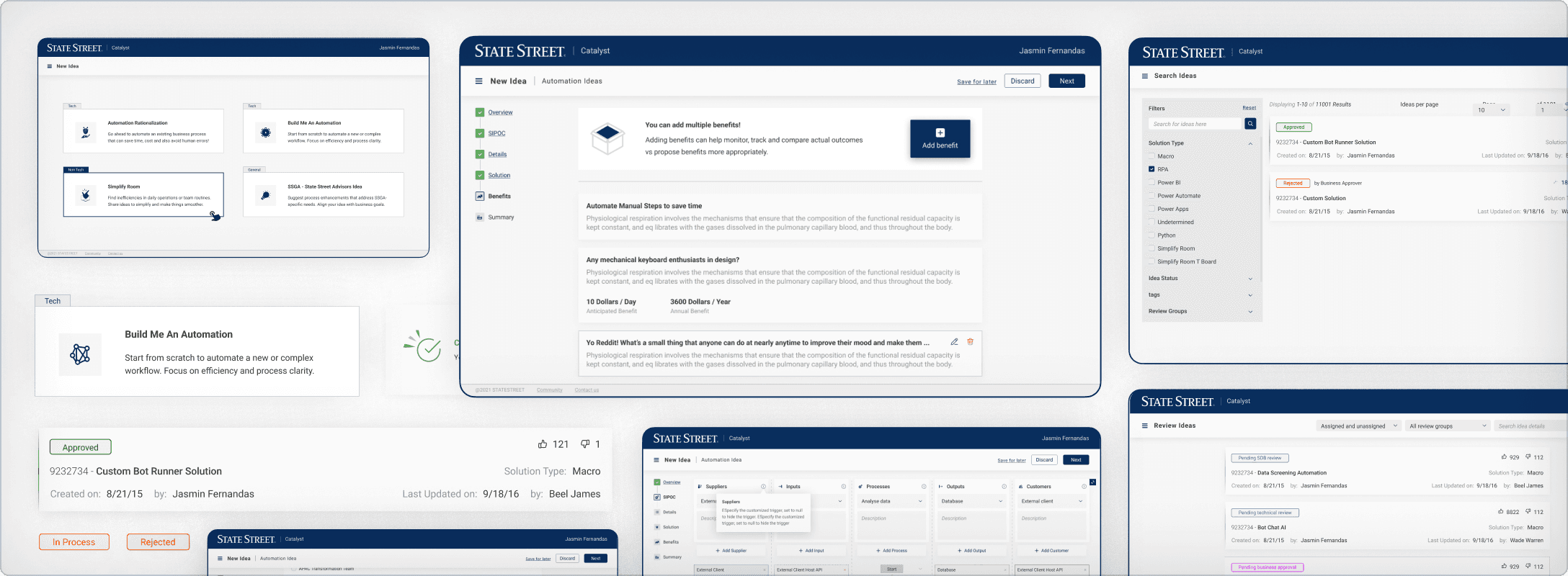
Within StateStreet multiple idea management portals (IMPs) were established and were dedicated to a specific team which worked strictly on the type of ideas that only catered to their use cases.
Catalyst was brought into existence as a unified platform that caters to multiple idea types. One platform that has it all from ideation to execution.
Business Objective
With catalyst, the clear goal has always been to increase innovation pipeline and success scope that directly resulted in the growth of the organisation. The pointers of priority is as follows:
Foster problem solving mindset to instigate the intent to ideate.
Get more quality ideas into the evaluation funnel.
Quicken review and approval turnarounds to save time.
Improve efficiency for arriving ideas into the implementation phase.
Reduce the number of incomplete and faulty ideas.
Increase employee engagement.
Offload support dependency.
Holisticly be able to understand the impact of executed ideas on the growth of the business.
Realising the Facts
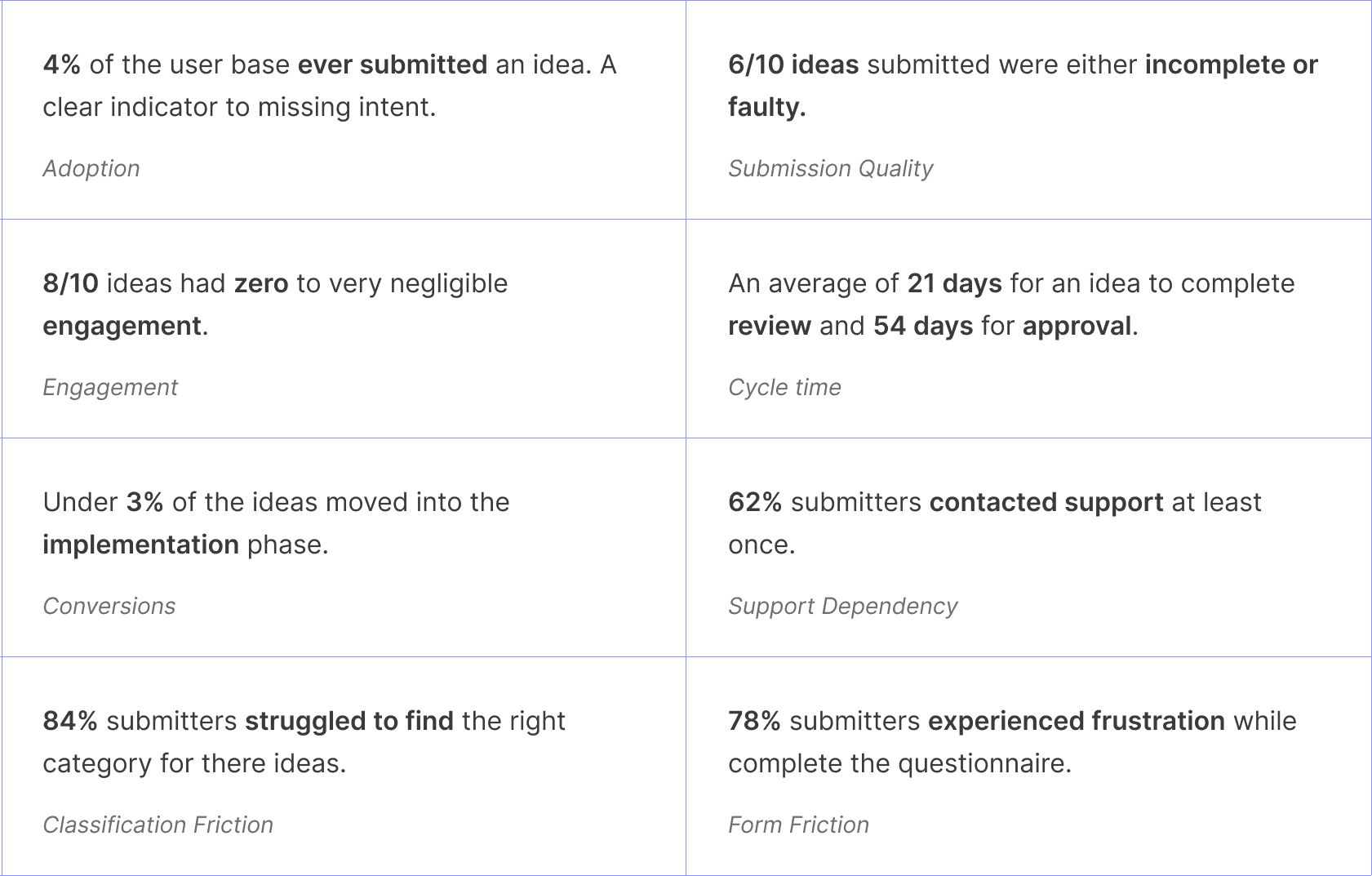
Started with a quick audit on existing idea management portals (IMPs), respective work flows, existing idea submissions, through review of platform data and also through conversing with submitters, reviewers and support team we were able to understand the short falls and uncovered the challenges pointing to:
Design Decisions
Outside of the product, it was important to embed opportunity finding and problems solving mindset into companies cultural beliefs and practices. Not that it did not exist, It required more attention.
Initiated activities like leadership storytelling, opportunities spotting campaigns (through celebrating questions and problem findings), “opportunity of the month,” recognition board, design thinking workshop, innovation hackathon and more in parallel to empowering catalyst as a sole enabler.
Simplifying complexity to clarity
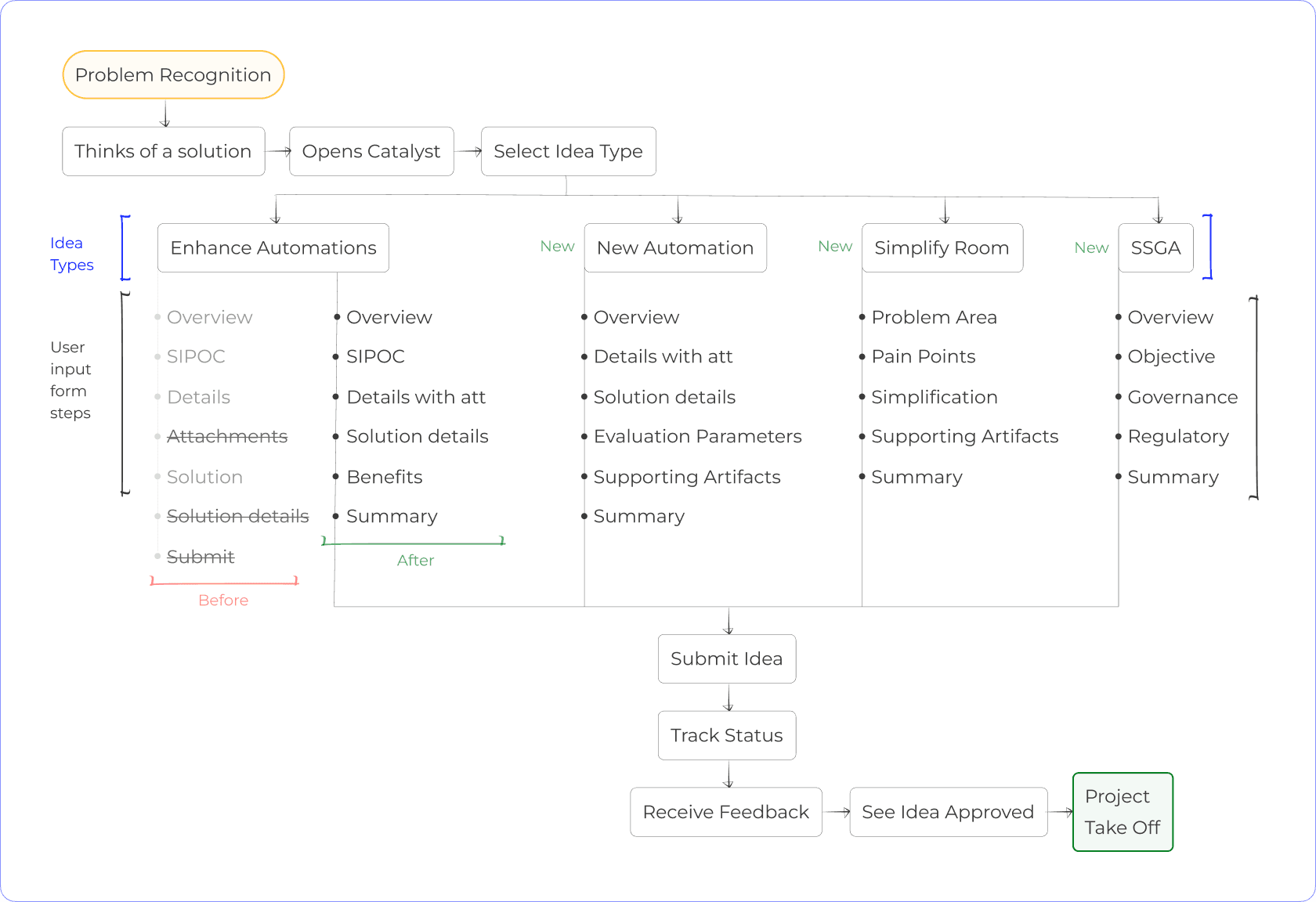
A lot of effort went into understanding idea types, building relatable questionnaires, gathering and clustering, grouping and classifying that help drafting a clean, clear, streamlined and relatable dynamic forms with structure and stepper.
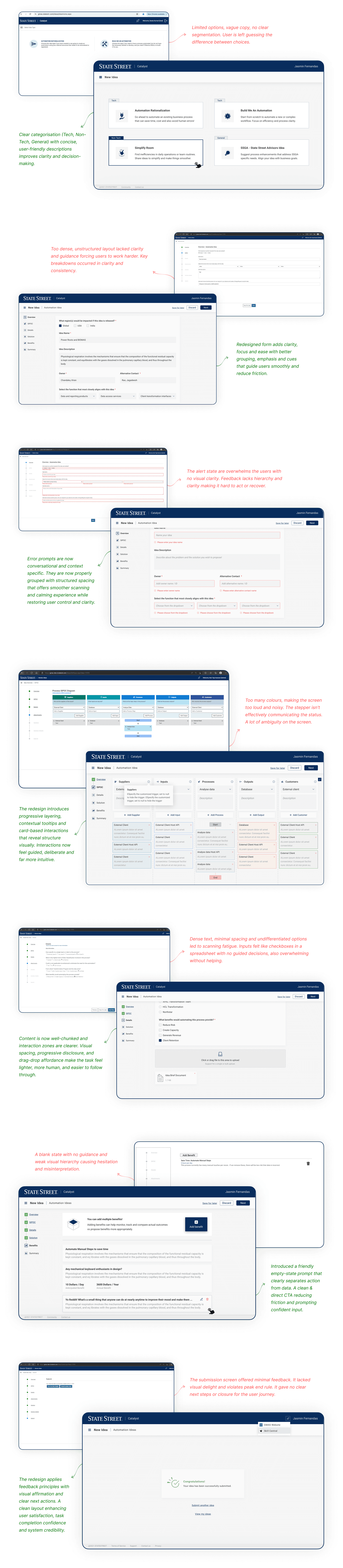
inviting ideas
Sneak peek on the before and after version of the product that involved simplifying the user flow for enabling users to efficiently fill in the forms that are dynamic to users input.
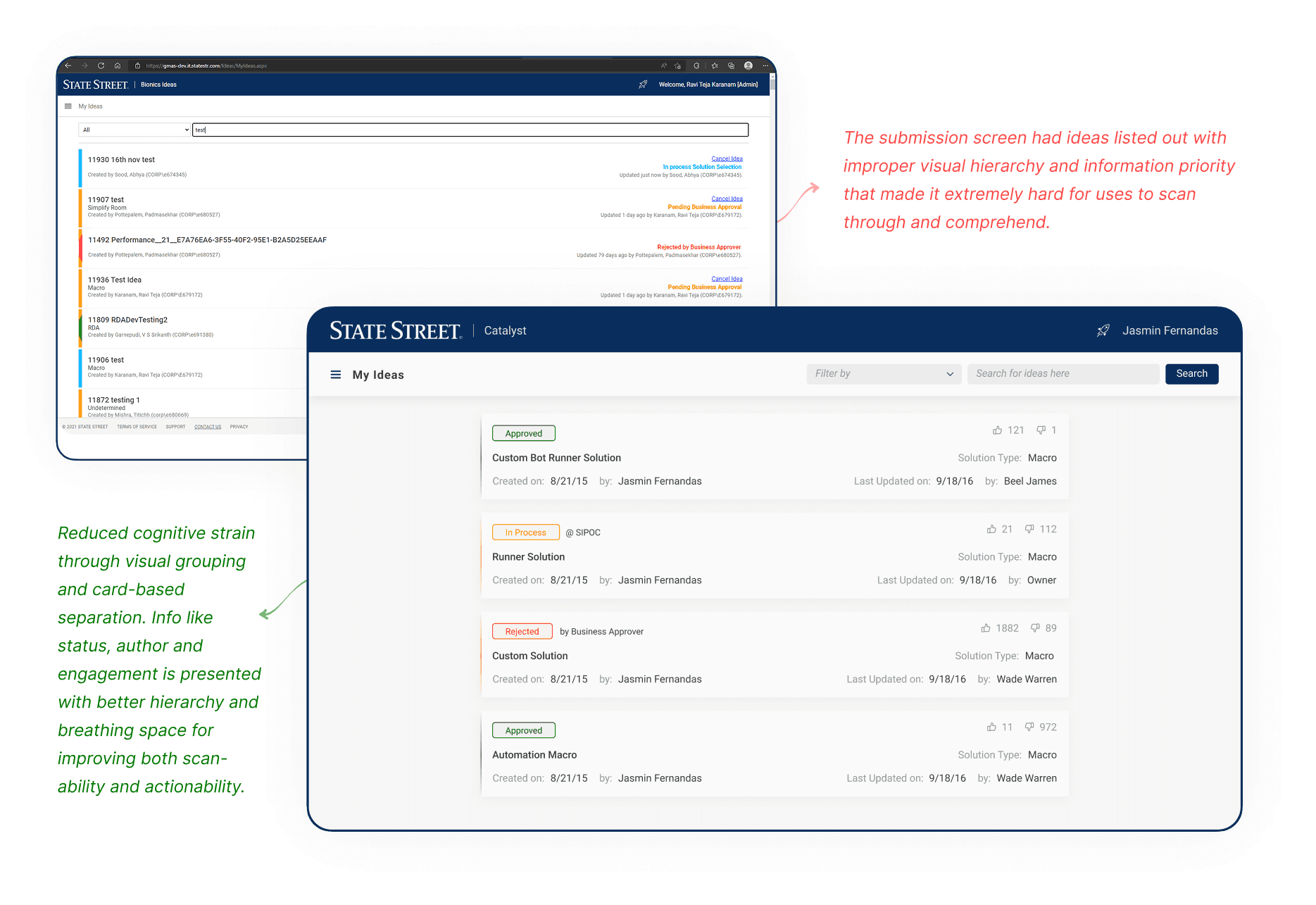
The idea pin board
A living history of every idea submitted on to the portal from fresh concepts to those nearing implementation. Track their status, see who contributed and discover the path each idea has taken.
Refined review flow
The below workflow diagram visualises the path of a submitted idea from the initial submission to a final decision. Showing, how it is reviewed and refined along the way.
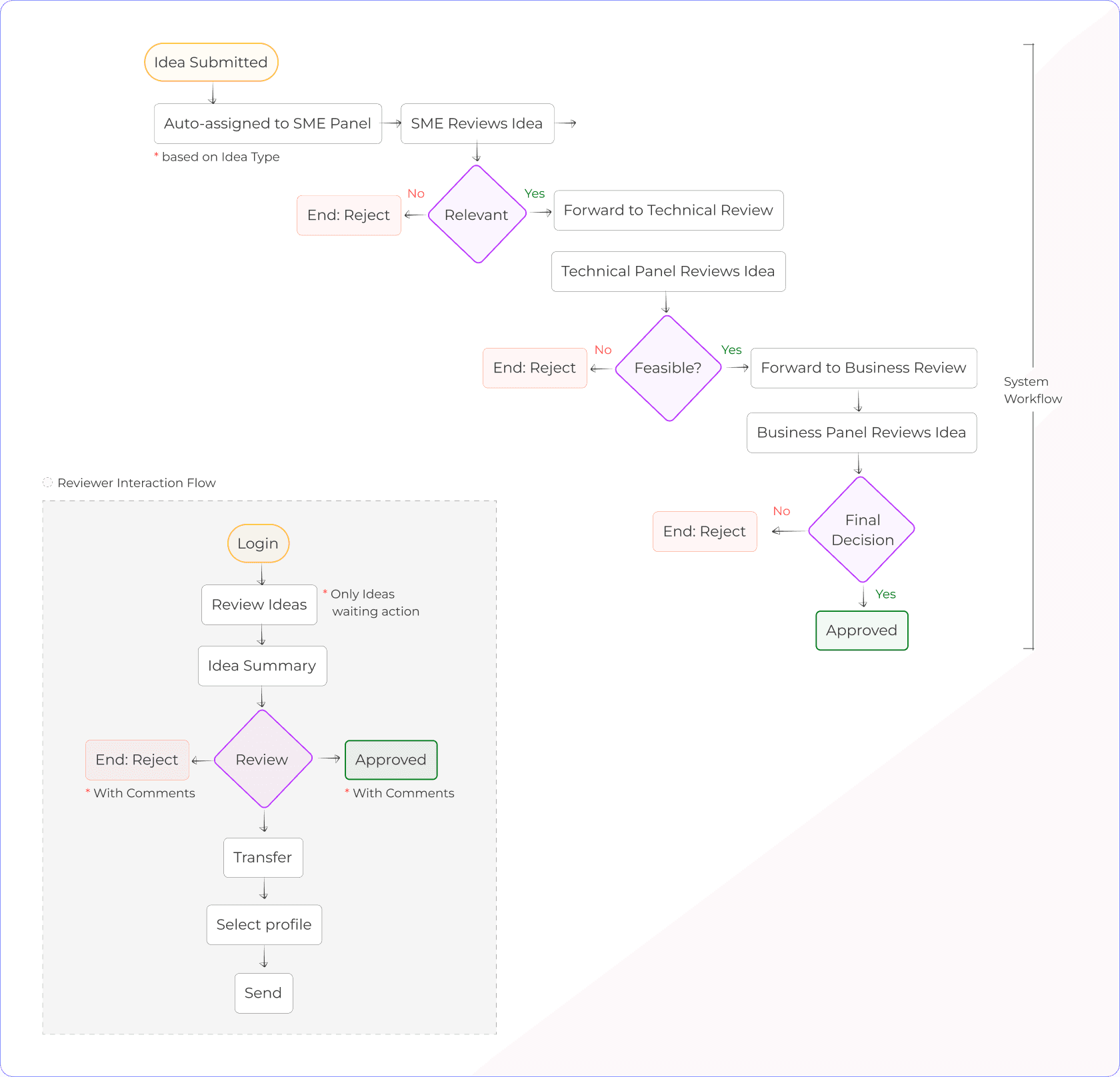
A quick walkthrough of how reviewers interact with the ideas assigned to them. It’s less about the screens, and more about how we brought structure to their decision-making with just the right amount of guidance, context, and control. The goal here wasn’t to add features, but to reduce the effort it takes to act and make sure good ideas get the support they deserved.
Results
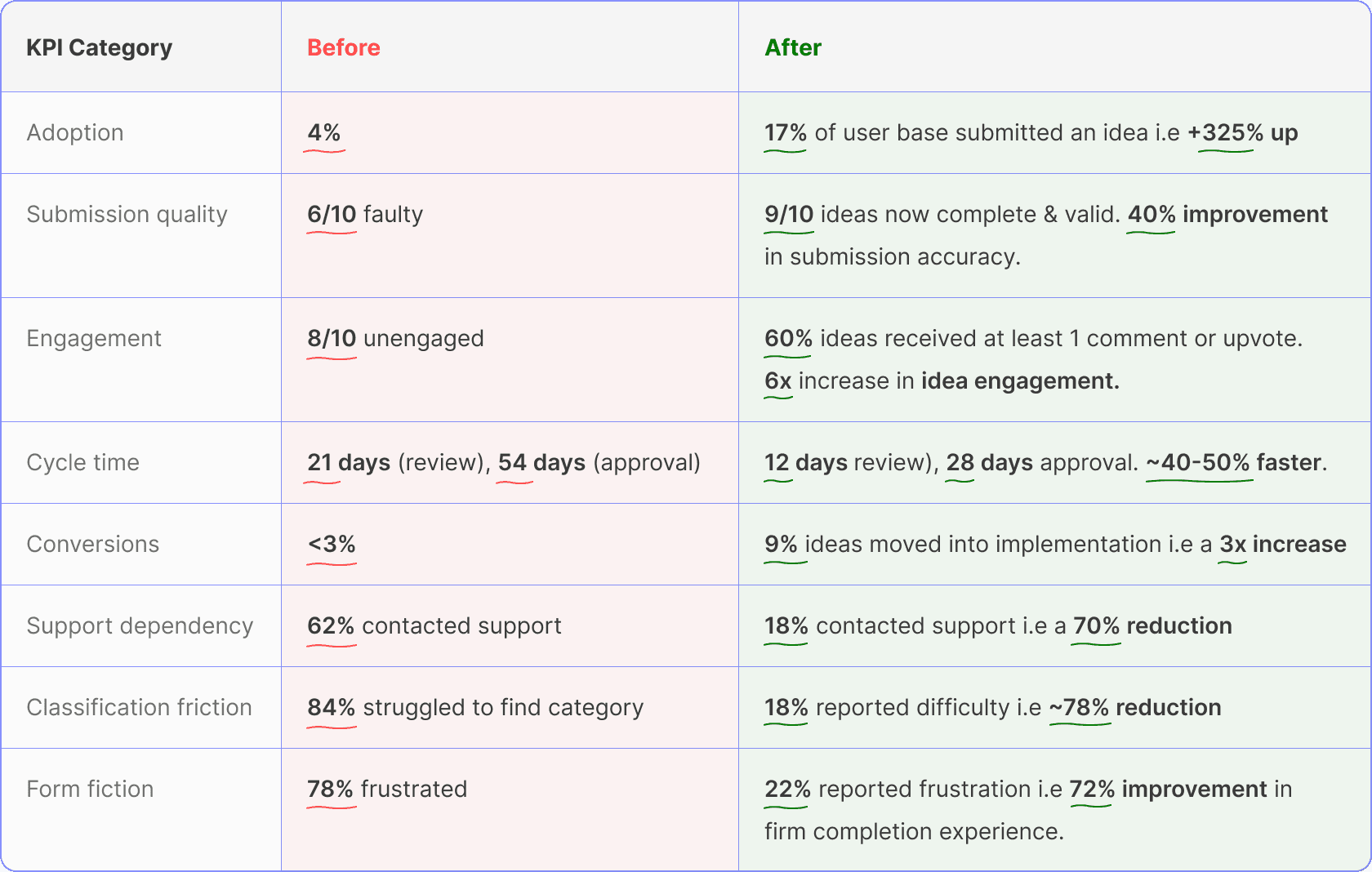
The redesign had demonstrated measurable improvements across all performance indicators validating the effectiveness of design lead interventions.
The enhancement in the onboarding, form experience, information architecture and review workflow not only improve adoption and engagement but also reduced operational friction and Support dependency.